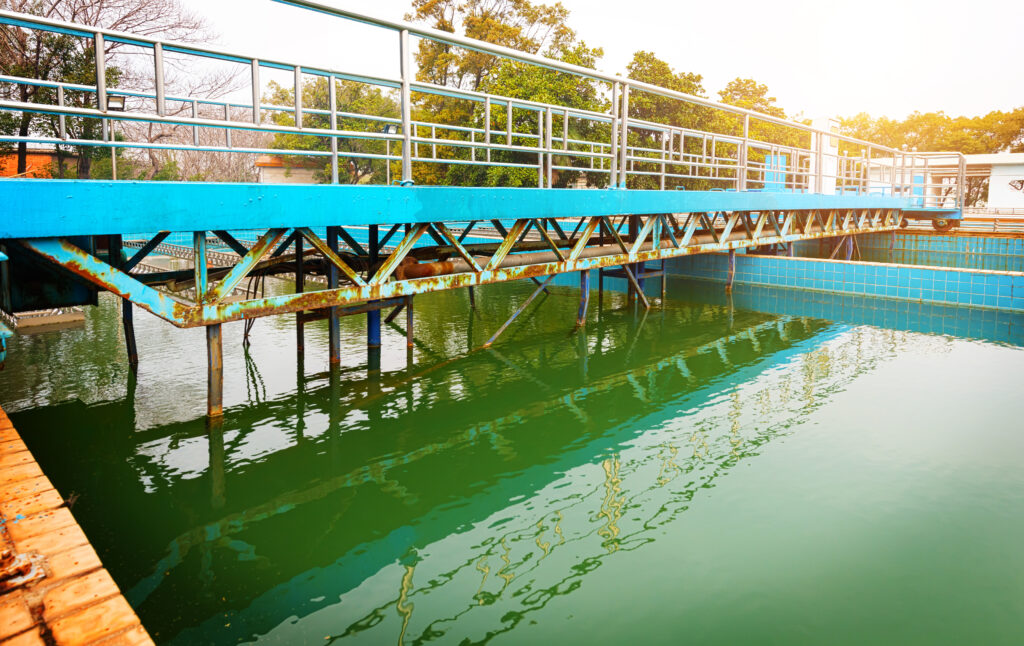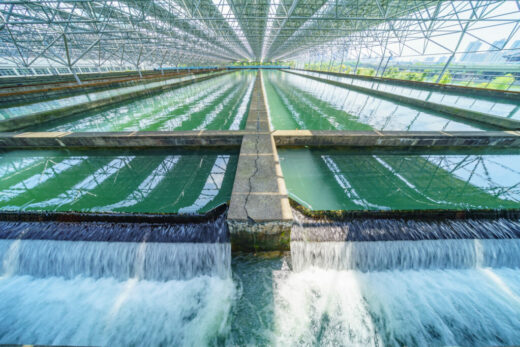
After domestic, agricultural or industrial use, water is polluted by various biological, physical or chemical substances. This wastewater is often reused or discharged into the natural environment. However, before being reused or discharged into the environment, it must undergo a purification process in a wastewater treatment plant. This process is divided into several stages, including the tertiary treatment phase. JC France Industrie explains the essentials of tertiary wastewater treatment.
Tertiary wastewater treatment: what is it ?
Tertiary treatment is a method of wastewater treatment that consists of eliminating non-biodegradable pollutants. It follows primary and secondary treatment. This technique allows the removal of phosphorus and nitrogen contained in the water to refine it. It is based on the use of chemical and physical processes. The tertiary treatment of wastewater uses, for example, the rotary screen which is a very important tool. Indeed, its use optimizes the separation of liquids and small solids.
The tertiary treatment offers the possibility to increase the quality of the effluents before they are discharged into the receiving environment (lake, field, sea, river). It occurs well after screening, which is part of the pre-treatment steps. However, several tertiary treatment processes can be used in wastewater treatment plants (WWTP). In any case, this filtration or purification mechanism of polluted water has several interests.
What are the challenges of tertiary wastewater treatment?
Firstly, the implementation of tertiary treatment is essential to comply with European and national standards on wastewater discharge. In other words, the elimination of phosphorus and other pollutants present in wastewater is a legal obligation.
In France, treated wastewater is most often reused for agricultural irrigation and watering of green areas. The effectiveness of tertiary treatment is therefore essential to guarantee the quality of the water before its reuse. The different methods used allow the complete removal of unwanted substances in order to meet predefined quality objectives.
For example, if wastewater is to be reused for vegetable irrigation, pathogens are removed. On the other hand, in the context of urban reuse, nitrogen and phosphorus are targeted during treatment. The same is true for groundwater recharge. This helps to avoid any risk of eutrophication.

How is tertiary wastewater treatment carried out ?
The tertiary treatment of wastewater is based on several methods of depollution. Among these, we have the use of rotary drum filters. These machines allow to filter more finely the polluted water at the level of the STEP. In the same way, a bacteriological treatment by UV radiation can be applied to the water in order to get rid of the substances that pollute it.
The use of rotary drum filters
Also known as a rotary screen, the rotary drum filter is a mechanical filtration device. Often made of stainless steel, it consists of a cylindrical drum with a mesh size of 26µ to 100µ depending on the application. The use of this tool is useful to optimize the separation of liquids and solids that have a minimal size. It is used to properly filter urban effluents and to purify wastewater. Rotary drum filters can be used in wastewater treatment plants (WWTP) as well as for the treatment of drinking water or fish farming.
The wastewater to be treated is guided into the drum and flows by gravity through the filter panels attached to the periphery of the screen. Suspended solids are removed by backwashing and gradually accumulate inside the rotating drum filters through a waste collection and discharge chute.
When the difference in level between upstream and downstream is too great, the screen rotates. This starts the cleaning cycle in order to filter the SS that are on the filter cloth. The water coming from the cleaning of the cloths is then recovered and evacuated independently of the filtered water.
Bacteriological treatment by UV radiation
A variety of UV systems are available to eliminate bacteria from wastewater. In fact, the principle of UV treatment consists in purifying wastewater by subjecting it to a source of UV radiation. In concrete terms, the polluted water is treated in a channel containing a multitude of submerged lamps.
In recent years, small wastewater filtration plants have been using a system based on single-lamp reactors. In any case, the bacteriological treatment by UV radiation helps to destroy many harmful bacteria.
Ultimately, the operation of a wastewater treatment plant is divided into several phases. After pre-treatment, primary treatment and secondary treatment, tertiary treatment is necessary to improve the quality of the treated water. It is possible to use the solutions proposed by JC France Industrie for wastewater treatment.