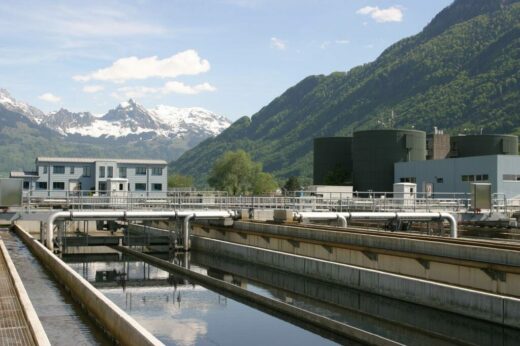
Before being discharged into waterways, wastewater needs to be treated to prevent pollution of the receiving environment and to avoid unfortunate consequences for the surrounding ecosystem. This wastewater treatment is carried out in a wastewater treatment plant after several well-defined steps. For industrial and municipal actors concerned by wastewater treatment, JC France Industrie offers high quality equipment for effluent treatment needs. How does a wastewater treatment plant work?
What is the purpose of a wastewater treatment plant ?
Wastewater treatment plants are generally located between a wastewater collection network and natural receiving environments such as waterways. Urban wastewater, domestic wastewater, rainwater, agricultural or industrial wastewater are collected by a collective or personal sewerage network. This wastewater is then conveyed via one or more sewage collectors to the wastewater treatment plant.
In the treatment plant, it undergoes various types of treatment (mechanical, physical, chemical, biological…) to obtain clean water, which can be discharged into the environment without major inconvenience. In order to reintegrate the water cycle without contaminating the environment, this water is cleaned of all organic waste as well as nitrogen and phosphorus. The purpose of treatment in a wastewater treatment plant is not to make the water potable for human consumption. By eliminating certain physical and chemical substances present in this water, we want to avoid: the pollution of groundwater, the emanation of nauseating odors, the intoxication of animals, soil pollution, etc.
Stages in the purification of polluted water
In wastewater treatment plants, four stages are generally distinguished : pre-treatment, biological or physico-chemical treatment, clarification and sludge recovery.
Pre-treatment of wastewater in the wastewater treatment plant
The first step here is the screening. This involves passing the wastewater from the sewage basin through a screen to remove bulky and inert materials (cans, plastics, branches, etc.). The waste obtained after the screening is then evacuated with the household waste. A second phase of screening with screens of small spacing allows to get rid of smaller solid matters. Screening protects the following tools in the treatment line, which are not designed to handle large solids (this could cause them to malfunction).
In order to optimize the performance of any sewage system, JC France Industrie offers automatic bar screens that are custom-made, durable and efficient. Depending on the specificities of the wastewater treatment activity, it is possible to find a customized automatic bar screen that brings speed, reliability and efficiency to the purification process. The models of mesh screen, fine or coarse screen, static screen, vertical screen proposed by JC France Industrie present an excellent quality-price ratio. The following phases of the wastewater pretreatment stage are those of sand removal, degreasing and oil removal.
In the first tank, the treated water is cleaned of heavier materials than water such as sand, gravel, shale and clay, which settle at the bottom of the desander. Then, the water flows into a second basin where the diffusion of fine air bubbles allows grease and oil to rise to the surface. These materials are recovered for further treatment in the wastewater treatment plant.
Biological wastewater treatment in the wastewater treatment plant
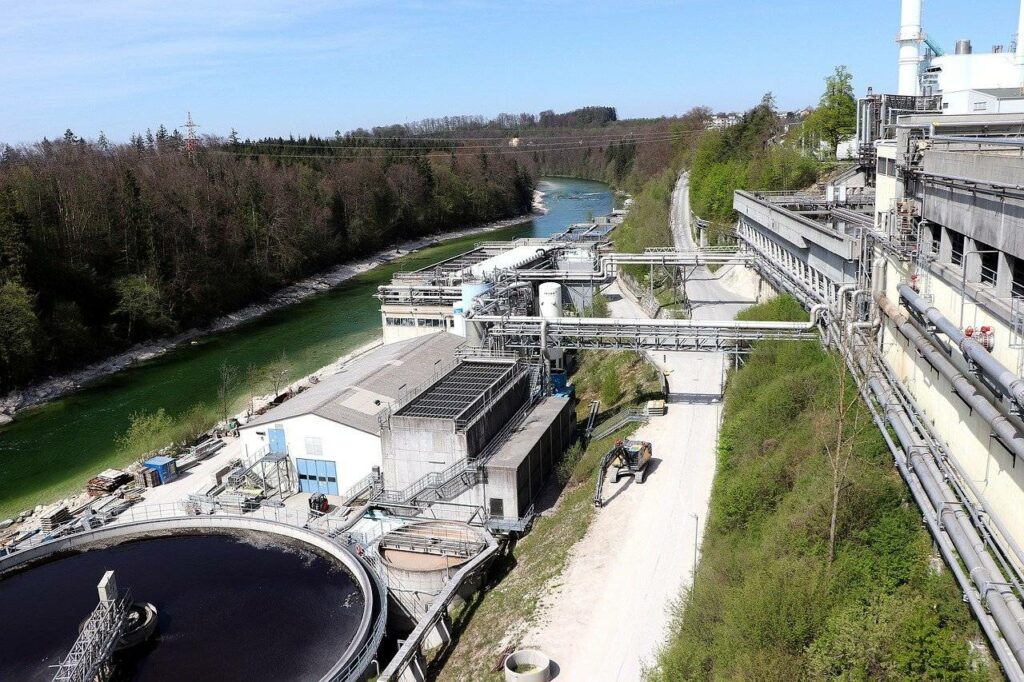
This stage of the treatment in the wastewater treatment plant concerns aerobic or anaerobic techniques having for objective the digestion and the transformation of impurities into sludge. In order to obtain clean water at the end of the treatment process, dissolved, carbonaceous, nitrogenous and sometimes phosphorus pollution is eliminated.
The activated sludge method
In order to eliminate the organic compounds present in the wastewater, aerobic bacteria equipped with powerful catalytic enzymes are used for a rapid oxidative degradation. Through the biological phenomenon of “nitrification-denitrification”, organic nitrogen is transformed into ammoniacal nitrogen in a first step by certain bacterial cultures. In a second step, the ammoniacal nitrogen is transformed into gaseous nitrogen which escapes into the atmosphere. Other microorganisms are also used to capture the phosphorus dissolved in the water. The biological method of activated sludge is the most widespread in wastewater treatment plants in France.
Biological processes with fixed cultures
A distinction is made between the bacterial bed and the biofilters. The bacterial bed allows the creation and degradation of a biofilm resulting from the decantation of wastewater on a porous bed composed of bacteria. Biofilters are generally a set-up of gravel, baked clays or sand beds that allow the purifying microorganisms to grow on discs. A common example of a biofilter is the reed filter. The system creates a biofilm that captures the pollutants to be removed.
Decantation digestion
Suspended matter falls by gravity, allowing the natural development of purifying bacteria. These bacteria complete the filtration process of the polluted water in the wastewater treatment plant.
Physicochemical treatment of the water in the treatment plant
This treatment mainly allows the elimination of dissolved pollution, phosphorus and suspended matter. It can be used alone or in addition to biological wastewater treatment. Generally, iron salts are poured into the water to react with the phosphorus and produce insoluble phosphates. These particles are then agglomerated by flocculation or coagulation to be eliminated by decantation.
Water clarification
In biological wastewater treatment, the resulting biological sludge is separated from the treated water in a special tank by means of decantation. A large part of the biological sludge collected at the bottom of the clarifier is re-injected into the biological tank to maintain an optimal stock of activated sludge. The water, which is on average 90% free of impurities, can now be discharged into the environment without fear of disastrous ecological consequences. At each stage of the treatment process, the water and sludge produced are analyzed to ensure that their quality complies with the requirements of current environmental standards.
Sludge recovery
The treatment of polluted water in the wastewater treatment plant results in the production of sludge. Depending on the stage of production in the wastewater treatment service, a distinction is made between : physicochemical sludge, primary sludge, secondary sludge, mixed sludge and lagoon sludge. They are dehydrated to be used as fertilizer for agricultural soil fertilization. When considered as waste, it can also be incinerated. The effective management and treatment of domestic, agricultural or industrial wastewater in wastewater treatment plants requires efficient equipment to achieve the best results. To facilitate the purification of polluted water to be discharged into the environment, JC France Industrie provides a range of industrial and domestic effluent treatment equipment at the cutting edge of technology. Especially for the treatment of polluted water, the reliable and efficient automatic bar screens of the brand secure the rest of the effluent treatment process.