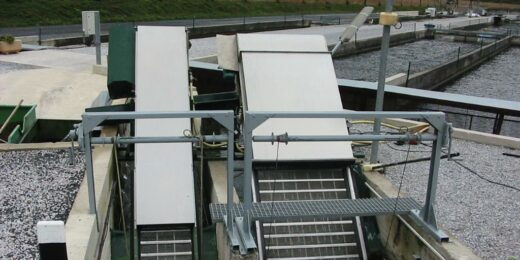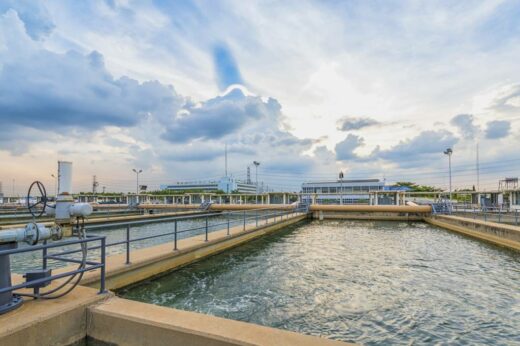
Screening is one of the most important steps when it comes to wastewater treatment in a wastewater treatment plant. With the help of a bar screen, it is possible to adapt the water content to the treatments (mechanical, biological and physicochemical) to be followed. In terms of bar screens, JC France Industrie offers professionals excellent accessories to suit all use needs, regardless of the field of activity. Considering the size of the waste to be trapped, one can easily find the ideal screen for his industrial screening activity. Here is the important information you need to know about the screening of polluted water.
What is the purpose of wastewater screening ?
Before the actual treatment process begins, water polluted by human activity usually contains organic waste of varying sizes that must be removed. A screen with an ideal size is then needed to intercept this waste efficiently. Screening will therefore consist in positioning screens separately or along a straight channel to capture the rags, textiles, plant debris and plastics present in the wastewater. The nature and concentration of this waste, called screenings, differ according to the human activity that polluted the water. The choice of screens is also made accordingly.
After treatment, the wastewater no longer has any coarse waste or sludge on the surface. Screening also allows the protection of downstream water and sludge treatment equipment against more or less complex malfunctions. These structures located downstream of the bar screen are not designed to handle the coarse solids contained in the wastewater flow. This prevents clogging of pipes and valves, damage to turbine blades or filtration membranes, or malfunction of electromechanical equipment.
Thanks to the bar screen, the load of water sent to the plant is also considerably reduced, allowing a more efficient and rapid treatment of the polluted water. Refuse that agglomerates in the wet area of the screen needs to be raked or scraped away for a smooth flow of water. This cleaning can be done manually with rakes or automatically with combs or scrapers.

The forms of screening
The specific spacing between the bars of the screen gives rise to several levels of screening. We distinguish :
- the pre-screening when the screen has a spacing higher than 40 mm,
- medium screening when the screen has a spacing strictly between 40 mm and 10 mm,
- fine screening when the spacing of the screen is strictly between 10 mm and 6 mm,
- ultra fine screening or sieving when the screen spacing is strictly between 0.5 mm and 6 mm.
At the screening stage, it is common to arrange several screens one behind the other. The spacing of the preceding screen is larger than the spacing of the following screen. Sometimes, upstream of a critical stage of wastewater treatment, a bar screen can also be used to ensure proper elimination of waste that may complicate further operations.
The different models of bar screens
Taking into account the types of sludge and water to be treated, we distinguish between manual and automatic bar screens. Automatic bar screens are often placed upstream of manual bar screens to form an efficient and complete bar screening chain.
Automatic bar screens
This is now the standard for most wastewater treatment plants. If you choose a well-designed automatic bar screen from an experienced manufacturer, you can optimize the quality of the screening process and speed it up. Bar screens reduce human intervention in the treatment of polluted water to a minimum. To equip your station with an automatic bar screen for polluted water, JC France Industrie offers you its custom-made designs at the cutting edge of technology.
The advantage here is that the wastewater treatment plant can customize any type of bar screen essential to its activity. The choice exists, indeed, between a static automatic bar screen, a vertical bar screen, a mesh bar screen or a coarse or fine bar screen. Whether it is the screen, the lifting winch, the turbine blades or the valves, each element of the bar screen is tailor-made to meet the specific technical realities of polluted water treatment. All the references proposed for the screening of wastewater are durable and have an excellent quality-price ratio, which makes it possible to make a good return on investment.
Manual bar screens
Manual bar screens require human assistance to function properly. These models are most often used to screen wastewater in non-collective sewerage systems. They can be found in small treatment plants, alone or in addition to automatic bar screens.
Precautions to take when screening wastewater
In order to obtain an optimal application of the suspended solids in the water to the screen during the screening, several parameters must be taken into account. These are the void coefficient, the surface area and the width of the screen. The angle of inclination of the screen as well as its clogging coefficient must also be calculated precisely according to the quality of the water to be treated. The objective is to avoid a deep clogging of the bars of the screen, to prevent the passage of water with the waste and to keep a significantly high head loss.
Therefore, when the screen is clogged, the maximum flow of water allowed to pass should be between 0.5 and 1.2 meters per second. Similarly, in the channel leading to the screen, the approach velocity of the wastewater should be between 0.5 and 0.7 m/s -1, regardless of the flow. The automatic screens should be about 75% clogged (this rate is expressed in terms of the free wetted section) if the distance between the bars is less than 5 mm. It is about 50% when the spacing is between 5 mm and 10 mm. Finally, a spacing of 25% is tolerable if the spacing is greater than 10 mm.
For all the needs of screening polluted water, JC France Industrie offers the best accessories to succeed in the operation in the rules of art, whatever the quality of the effluents to treat. Contact us now for your various projects in this field, you will benefit from personalized and efficient solutions.