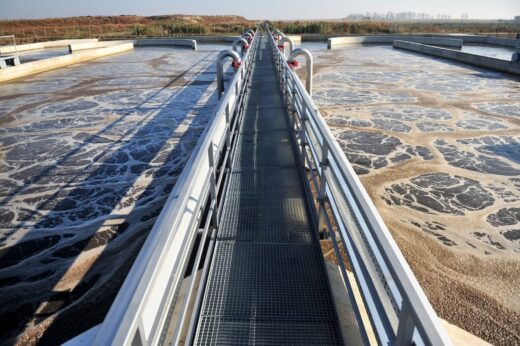
Water is a natural resource essential to human life. Used in domestic life as well as by industries, wastewater can be contaminated by organic and inorganic pollutants. Without treatment, its discharge into nature or into the distribution networks could have serious consequences on the environment and on human health. This is why pre-treatment is a crucial step in the water purification process.
What are the processes used in water pre-treatment ?
Pre-treatment of water, especially from sanitary networks or industrial wastewater, is the initial step in the water purification process. It consists in removing physical and chemical contaminants from the raw water. Pre-treatment can be carried out according to different processes. There are physical processes, physical-chemical processes, chemical processes and biological processes.

Physical processes
- Screening is a process carried out using a bar screen (automatic bar screen, manual bar screen…) which consists in retaining the large debris (plants, textiles, plastics…).
- Screening, which consists in filtering smaller particles through a fine screen.
- Decanting, which consists in letting the water rest so that the heavy particles settle at the bottom.
- Filtration, which consists of passing the water through a porous medium to remove impurities.
- Flotation, which consists of injecting air into the water to float the impurities and remove them from the surface.
Chemical processes
- Oxidation, which consists of adding chemicals to remove organic and inorganic contaminants by chemical reaction.
- Resin ion exchange, which consists of removing unwanted ions by exchanging them with ions from an exchange resin.
- Neutralization, which involves adjusting the pH of the water by adding chemicals to make the water more neutral.
- Acidification, which consists of lowering the pH of the water by adding acid.
The steps of water pre-treatment
Wastewater pre-treatment involves several successive steps. Each step has a specific role in removing certain contaminants. Here is what the wastewater pathway looks like before full purification treatment.
- Step 1: Water is collected and transported to a treatment plant.
- Step 2: Screening the water through a bar screen to stop major floating debris.
- Step 3: Screening of the water through finer filters to remove the smallest waste (plankton, sand, etc.).
- Stage 4: Flocculation/settling of the water. At this stage, nearly 90% of the suspended solids are removed.
- Stage 5: Filtration of particles that are invisible because of their minute size. This is called micro, ultra or nanofiltration.
The following steps concern water treatment and include disinfection/ozonation (step 6), the application of specific treatments to improve the organoleptic qualities of the water (step 7), and finally chlorination (step 8). Finally, the water, which is now potable, is stored before being redistributed through the piping networks (step 9).
Why is water pre-treatment important ?
Water pre-treatment removes physical, chemical and biological contaminants that can affect the quality of drinking water. It is important on several levels.
First of all, water pre-treatment is essential for industries (wastewater treatment plants, drinking water treatment plants, etc.) to protect the water treatment equipment. Physical contaminants can clog pumps, membranes and filters, which can lead to high repair costs and increased energy consumption. Water pretreatment thus improves the efficiency of water treatment in general.
Finally, water pretreatment is important to ensure the safety of the drinking water supply. It is essential to ensure that the water distributed to the population does not contain any dangerous or even lethal contaminants.

Water pre-treatment is a crucial step in the water purification process. It removes physical and chemical contaminants from the raw water before it is treated. The various stages of pre-treatment all play an important role in removing contaminants and protecting water treatment equipment. It is an essential step in ensuring access to safe and healthy water for all.