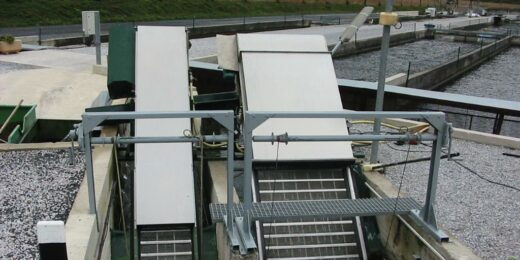
Screening is one of the main steps of wastewater pretreatment in industry. This filtering process is carried out by a screen (manual or automatic). It is an installation that allows to retain all the fine and voluminous waste present in industrial effluents, before moving on to biological treatment. JC France Industrie presents here the different fields of application of this equipment and its operating mode according to each use.
Water treatment in the food industry
The food industry is one of the most water-intensive industries. From the washing of raw materials to the manufacturing of products, the amount of water required is particularly high. According to a recent study, it is estimated that it takes about 1.5 liters of water to produce 1 liter of milk. With this level of consumption, the amount of wastewater discharged is quite significant. In order to meet environmental protection standards, it is essential to install treatment and purification equipment for this polluted water from the factories.To ensure effective treatment, coarse solids in the water must be removed first. This upstream filtration, also known as screening, offers the possibility of avoiding the risks of malfunctioning of the water and sludge treatment equipment. It consists in passing the wastewater through a screen. It is an automatic or manual installation composed of several screening grids. For an efficient purification, the screening is done in different stages with 2 to 4 screens, installed one after the other.

Water treatment in slaughterhouses
The slaughtering industry is another area in which bar screens are also very useful for the pre-treatment and purification of wastewater. In this sector of activity, the rules applicable to the disposal of wastewater are partly defined by Articles 43 to 46 of the Order of 21 November 2017. According to this legislation, animal by-products and all other waste must not be discharged into the environment. This implies an efficient filtration of the effluents. For this, the screen is a particularly effective solution.
In slaughterhouses, upstream screening is used to remove bone fragments, meat debris and animal hair from the effluent. In order to ensure a better wastewater treatment, the installation must be composed of several screens with different grids :
- the pre-screening grid with a minimum spacing of 40 mm,
- the medium screening grid, with 10 to 40 mm spacing,
- the fine screening grid, with a spacing of 6 to 10 mm,
- the ultra fine screening grid (also called sieve), with 0.5 mm to 6 mm spacing.
At each screen, solid waste is targeted specifically according to its volume. The most voluminous debris is thus eliminated at the pre-screening stage, and the finest debris is sieved at the last stage.
Effluent treatment in WWTP
The sewage treatment plant (STP) is a facility for the collection and treatment of urban wastewater. In such a facility, the use of a screen is very effective in filtering out dead leaves, pieces of wood, plastic debris and any other waste. In order to effectively provide urban sanitation, the WWTP must treat and depollute very large quantities of wastewater each day.
To meet this need, the bar screen of the wastewater treatment plant must be able to handle a large load of water and waste. The bar screen system proposed by JC France Industrie is perfectly adapted for such a use. It is a coarse automatic bar screen with an opening of 6 to 100 mm at the bars. The device is equipped with a gravity discharge system or a mechanical ejector depending on the model.
A WWTP screen with such characteristics can improve the effluent treatment performance. Depending on the situation, the wastewater treatment plant can also install a fully customized screen system. This may be necessary to increase the treatment and discharge capacity of the polluted water. However, such a design must be entrusted to a competent and authorized manufacturer such as JC France Industrie, which offers a wide range of custom-made screening solutions.
Industrial water treatment
In industry, wastewater management is subject to particularly strict environmental protection standards. These require the treatment of effluents before they are released into the environment. While this rule is often associated with the biological composition of the discharged water, it also concerns residual debris that can pollute the environment. This is the case, for example, for residual metals and pieces of plastic carried by the water.
To prevent this pollutant waste from ending up in nature, it is important that all the wastewater produced in industry is filtered before it is discharged. Here again, the bar screen is an indispensable solution. Its use not only helps to preserve the environment, but also to prevent waste from becoming encrusted in the biological water treatment equipment. For industrial use, however, the screening system must be composed of high quality screens that can withstand the chemicals present in the water.

Agricultural water treatment
Fertilizers, pesticides, insecticides, crop residues… Runoff from farms can carry a variety of pollutants along with it. If there is no treatment system, these pollutants can easily end up in oceans, lakes and rivers. To prevent this, current laws require that farm effluent be collected and treated before it is released into the environment.Screening plays an essential role in this process. As the polluted water passes through the screens of a bar screen, it leaves behind all the solids it contains. This is the very first step before the water is returned to PH and released into the environment. The automatic bar screen is the perfect choice for upstream screening in a collective sewer system. On the other hand, in the case of a private installation (of small size), a manual model is largely sufficient. These two models of bar screens are available from JC France Industrie, a company specialized in the design of state-of-the-art water filtration systems.