France has sufficient water resources to meet its needs. A major risk lies in the deterioration of the quality. Water that does not meet certain quality or purity standards can cause illness, so it is important to know how the water is classified and what type of regulations apply in order to prevent pollution.
The pollution of our water supply is a major problem. This is why we need to clean up the wastewater that ends up in rivers, lakes and groundwater.
In France, the majority of the population lives in cities. As a result, they experience high levels of industrial and domestic pollution that is concentrated in urban sewers, where untreated flows end up flowing freely into rivers or seas without any treatment, causing considerable damage to both human health and our ecosystems.
Sewage treatment
Water sanitation, also called pollution control, is a service that removes the harmful effects of human waste on water quality before it is returned to nature. Sanitary sewers are indispensable to protect people from disease.
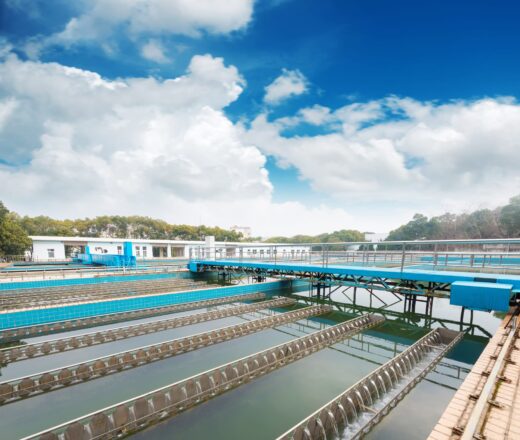
Wastewater treatment plants are essential because they keep our rivers from becoming sewers. More comprehensive wastewater treatment programs keep swimming water sources clean and safe by blocking viruses or bacteria that can spread disease around the world.
The stages of drinking water production :
1) COLLECTION
Capture and transport to the drinking water treatment plant.
2) SCREENING
Passage through mechanical filters to stop floating bodies and large waste.
3) SIFTING
Finer filtration to stop smaller waste, sand, plankton…
4) FLOCCULATION – DECANTATION
Discharge of a coagulant product to group the impurities in small packets (flocs) and eliminate 90% of the suspended matter.
5) FILTRATION
Filtering of the particles in suspension, invisible but still present, carried out on traditional materials (sand) or adsorbents (granular or powdered activated carbon).
Some installations use membranes capable of filtering minute particles (microfiltration, ultrafiltration, nanofiltration).
6) DISINFECTION – OZONATION
Neutralization of viruses and pathogenic bacteria and then injection of ozone (gas). Sometimes ultraviolet light is used.
7) SPECIFIC TREATMENT
Adsorption on activated carbon. Refining treatment to eliminate organic matter and improve the organoleptic qualities of the water (taste, smell, clarity).
8) CHLORATION
Addition of a small amount of chlorine to preserve the quality of the water as it travels through the pipes to reach the taps.
9) STORAGE
Once the water is made drinkable, it is sent to tanks where it is stored before being transported through a network of underground pipes to the homes.
JC France : designer and manufacturer of wastewater treatment equipment
For 10 years, we have been manufacturing equipment dedicated to wastewater treatment for industrial and municipal customers worldwide. Our equipment is designed to cover all the needs of any wastewater project.
Discover our product ranges: automatic bar screens, rotary drum filters or our other equipment dedicated to industrial and urban water treatment.