Water is a precious resource and we must do our best to protect it. All wastewater must be purified before being reintroduced into the natural environment. There are many processes that allow us to achieve water that integrates without upsetting the ecosystem of the discharge site.
There are two main types of wastewater treatment. The biological treatment or the physicochemical treatment.
The 6 steps of wastewater treatment
When we talk about wastewater treatment, it is inevitable that the first thing that comes to mind is the wastewater treatment plant. These plants treat the water before discharging it back into the natural cycle.
Wastewater from populated areas is transported to the treatment plant via the sewage system. Here are the 6 stages of wastewater treatment.
Screening
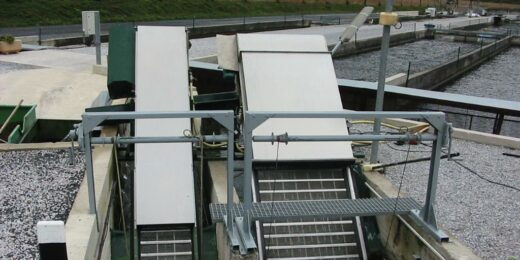
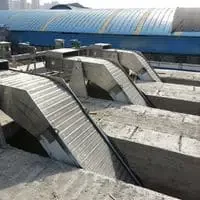
Screening removes coarse waste such as wipes, rags, plastic or wood from the water. These wastes cannot degrade naturally over time, so they must be removed mechanically instead of being treated biologically or chemically. This is why JC France manufactures and supplies bar screens all over the world.
Most of these machines are equipped with automatic cleaning systems in order to avoid any clogging, but also because problems can sometimes occur during the use of the machine and lead to a malfunction.
Sand and oil removal
The elimination of sediments is done by decantation, while greases are eliminated with the help of micro bubbles which help them to rise to the surface and to be evacuated by a scraping bridge. The collection of this waste is subject to a reprocessing and a revalorization of organic or sedimentary matter.
Biological treatment
This is the essential step of wastewater treatment which consists in reproducing the natural processes that exist in rivers. To accelerate this process, bacteria are used to digest impurities and transform them into sludge.
Aerobic techniques, such as those of the active sanitation system (with oxygen), are the most widespread in France today, but anaerobic methods also have their place.
Clarification
The clarifier is a tank that separates the water from the sludge or secondary residues, resulting from the degradation of the organic matter. The impurities contained in this liquid are then controlled before being released into our natural environment. An analysis of the water is then carried out to control the respect of the discharge standards.
Tertiary filtration
As the discharge parameters can vary and not reach the standards, the interest of a filtration by drum filter is often necessary in order to further reduce the suspended matters as well as the BOD and COD but also the nitrates and phosphates associated with these floating particles.
JC France Industrie manufactures and markets this type of filtration with a mesh size of up to 20 microns and capable of treating very large flows.
Sludge treatment
The secondary sludge is formed from the pollutant load dissolved during the periods of sand removal and oil recovery (recovered after the secondary treatment). Mixed” sludge is formed by combining primary or secondary treated wastewater with untreated raw sewage in an activated sludge process. This sludge is biologically stabilized before being composted for use on farms. It can also be incinerated or landfilled (more expensive solution). For a customized installation to treat wastewater, contact Us.